

New 'Save the Wild West' Initiative Unveils Wild Horse Rewilding Strategy to Help Reduce Wildfire Risk
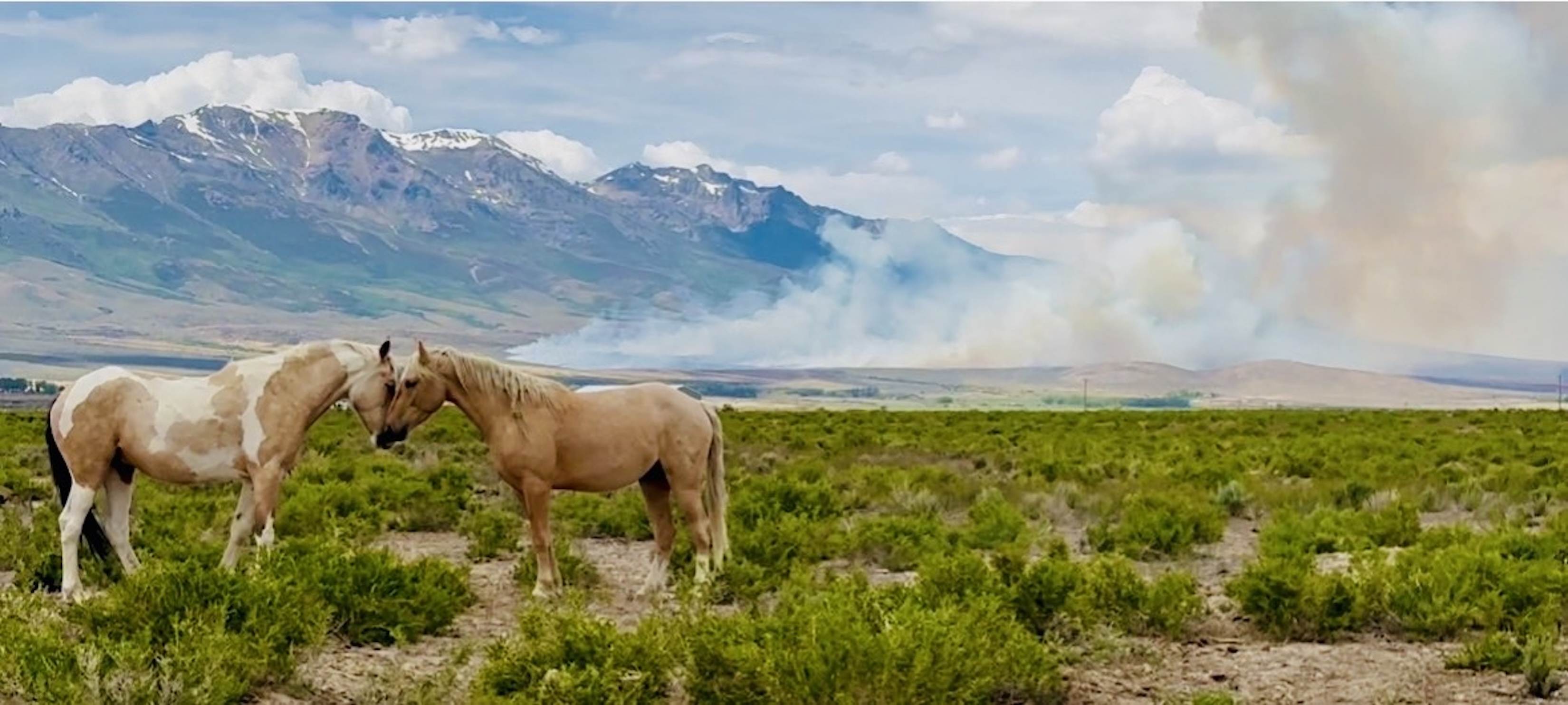
Northern Nevada--Two LWHF's rescued, rewilded wild horses comfort one another as smoke rises nearby. Less than half a mile away-an escaped controlled burn spread where free-roaming wild horses are not permitted-underscoring the need to restore them to Western landscapes
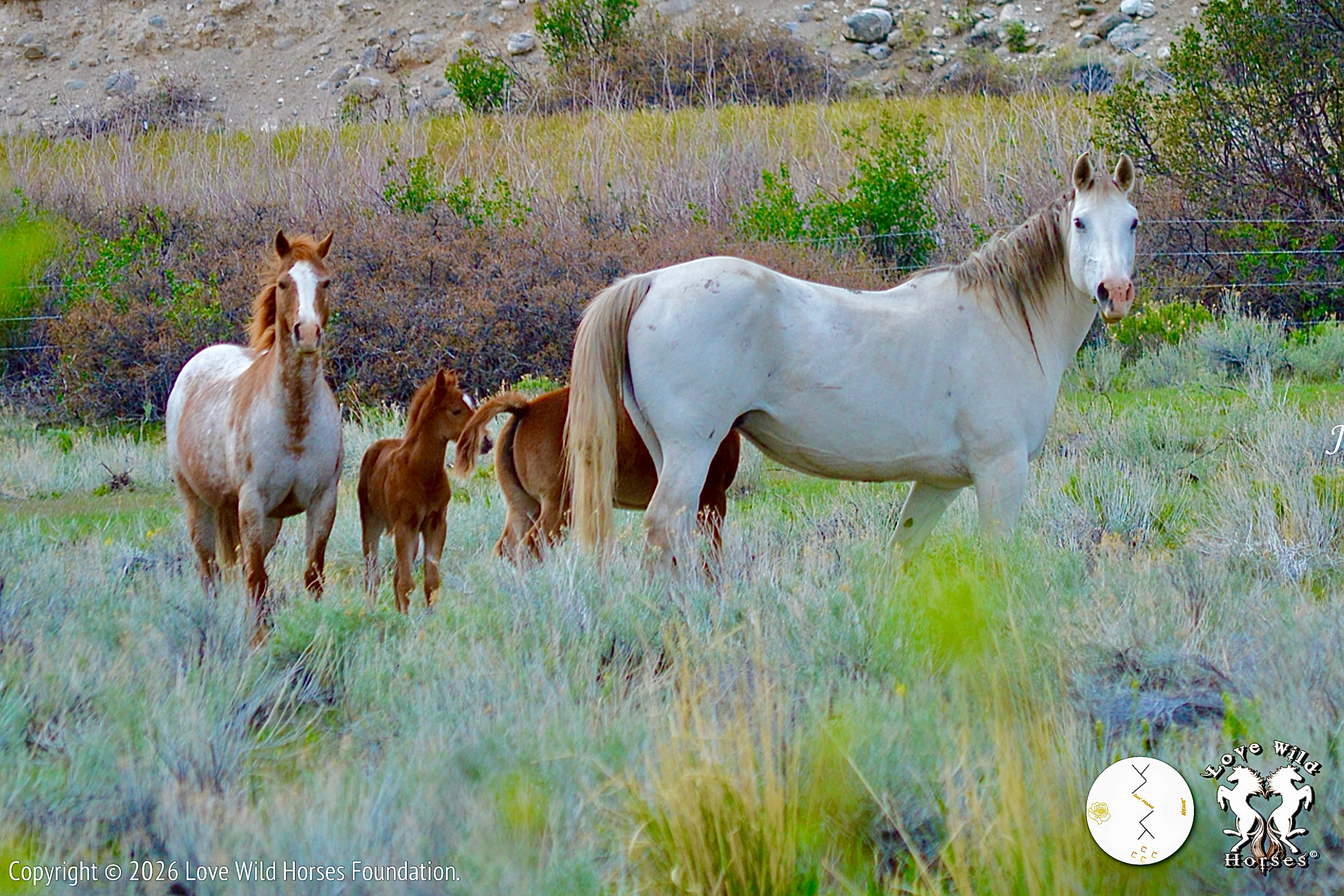
Two wild mares and their foals, spared from the slaughter pipeline, now roam free with their herd through Love Wild Horses Foundation's Land Resilience & Rewilding Project, in partnership with the Eastern Shoshone Warrior Society
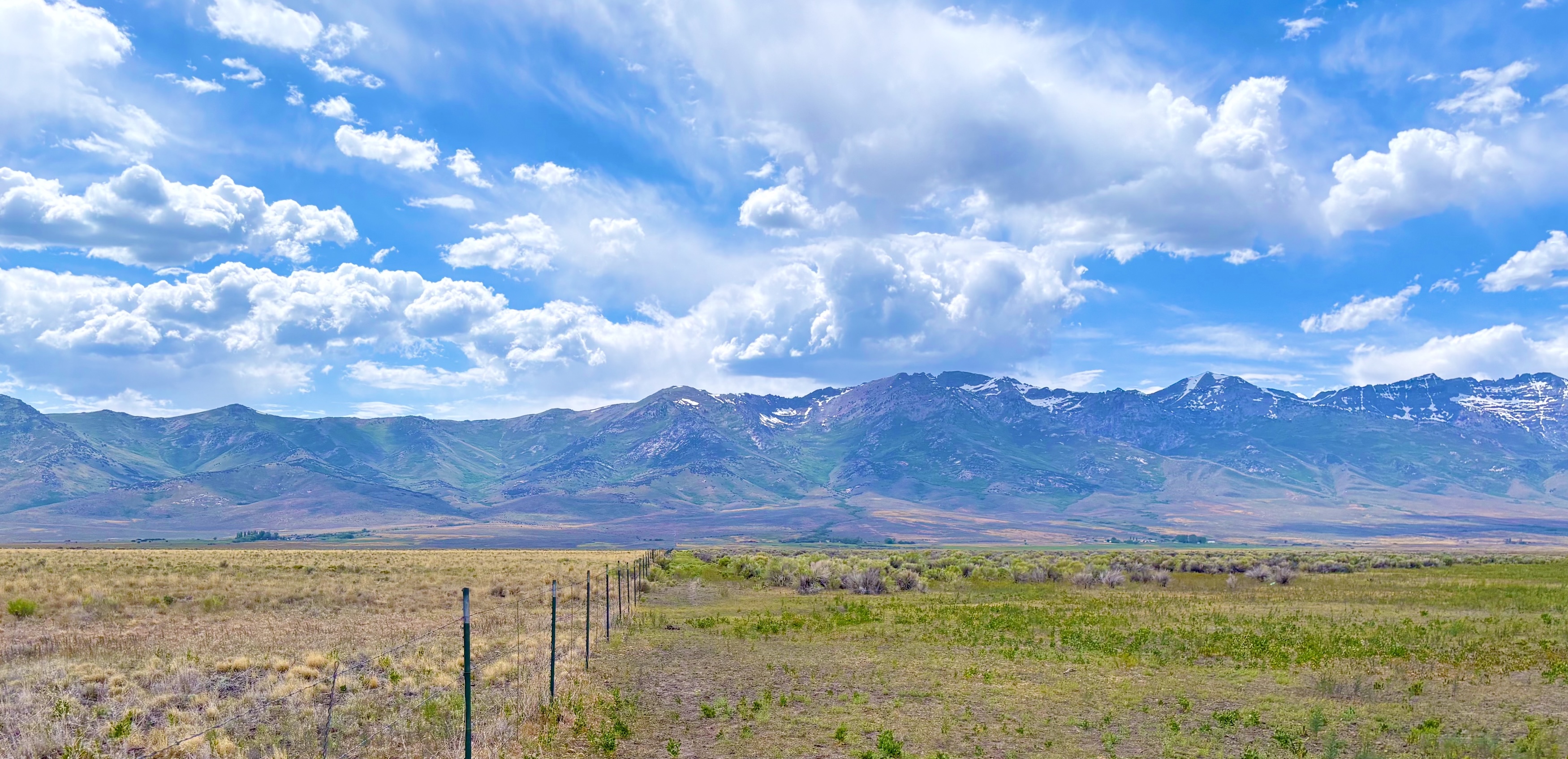
Nevada—LWHF's Rewilding Land Resilience Project. Left of the fence, where wild horses are absent, dry yellow grasses dominate. Right, where a rescued herd of 22 horses roams freely, grasses remain greener despite two years of drought
The Bureau of Land Management and United States Forest Service's ongoing removal of wild horses and burros has created an ecological imbalance that exacerbates wildfire risks. These animals are not merely part of the landscape; they are as a keystone species crucial for maintaining healthy ecosystems.
In regions like Northeastern Nevada, Utah, and California, the presence of wild horses has been linked to a decrease in fire incidents. These animals play an essential role in sustaining the ecological health of the Wild West, making it safer for both wildlife and surrounding communities.
The LWHF initiative is based on successful rewilding and land resilience models implemented in California, Wyoming, and Nevada. These models have demonstrated a significant positive impact on fire danger reduction, transforming landscapes from yellowing, flammable areas into vibrant green ecosystems. Where wild horses roam freely, the ecosystem thrives, reducing the likelihood of catastrophic wildfires.
Importantly, the “Save the Wild West” initiative is poised to benefit all stakeholders—including for public, state, private, and tribal lands. By fostering collaboration among these groups, the initiative aims to enhance the protection and restoration of land wellness, ensuring a fire safer and healthier environment for communities and wildlife alike.
A Call to Action for Legislative Support
LWHF is seeking a champion in Congress to support their initiative and introduce the “Save the Wild West” bill. This legislation not only aims to protect wild horses and their habitats but also presents an opportunity to save taxpayers approximately $25 billion in costs associated with wild horse and burro mis-management, wildfire mitigation, damage and land restoration. The round ups cost about $100 million per year.
The Foundation encourages citizens to contact their elected representatives to champion and urge support for the legislation. Private landowners, conservation organizations, and Tribal Nations interested in participating in LWHF's rewilding and land resilience projects are also invited to explore collaborative partnerships.
“The wild horses embody the spirit of the land, reminding us that their freedom is intertwined with the health of our ecosystems. As we face the threat of wildfires, we must recognize that safeguarding these magnificent beings is essential to maintaining our ecological balance and resilience in the Wild West."
--------An Oglala-Lakota, Chief Lee Plenty Wolf, Spiritual Leader, and a Director on LWHF’s Board of Directors
References:
- Wildfire Statistics and Trends in Utah (https://www.utahfireinfo.gov)
- Love Wild Horses Foundation’s Rewilding Models (https://www.lovewildhorses.org)
-New paper highlights the benefits of grazing with wild horses (https://rewildingeurope.com/news/new-paper-highlights-the-benefits-of-grazing-with-wild-horses/)
- The Role of Grazing Animals in Fire Prevention (https://www.nature.com/articles/s41598-018-20953-1)
-Horses Proven to Reduce Fire Risk (https://www.theportugalnews.com/news/2025-06-29/horses-proven-to-reduce-fire-risk/98946)
-Wild horses Save the West From Wildfires (https://lovewildhorses.org/f/saving-america’s-wild-horses-saves-the-west-from-wildfires)
- Desertification in the American West: Causes and Solutions (https://www.usgs.gov/mission-areas/water-resources/science/desertification)
- Fire rages in areas where wild horses aren’t permitted to roam (https://www.facebook.com/share/r/17eKJESVuD/?mibextid=wwXIfr)
-Yellow fire fueling grass on one side of fencing and despite two years of drought greener grass on the other side of fencing where wild horses roaming for 3 ½ years and are are participating in a five year LWHF Land Resilience project
(https://www.facebook.com/share/r/17eKJESVuD/?mibextid=wwXIfr)
-America the band (https://venturahighway.com/)
For more information or to schedule an interview, please contact LWHF’s Founder and President, Jetara Séhart 833-2ReWild or heartofsky@lovewildhorses.org.
Jetara Séhart
Love Wild Horses Foundation
+1 833-273-9453
email us here
Visit us on social media:
Instagram
Facebook
YouTube
TikTok
X
Legal Disclaimer:
EIN Presswire provides this news content "as is" without warranty of any kind. We do not accept any responsibility or liability for the accuracy, content, images, videos, licenses, completeness, legality, or reliability of the information contained in this article. If you have any complaints or copyright issues related to this article, kindly contact the author above.
